


How to Make a Last

A last is a generalized anatomical representation of the human foot shape. Created from a data set and functional requirements specific to a sport, a desired look, or an athlete, a master last is created from which production copies can be made. Production lasts are made from either turned (lathed) plastic, or sandcast aluminum. The Last is First.
Click the Read More link below for a review of the processes involved in making both plastic and aluminum lasts.
Part 1 > Making a plastic Last
Part 2 > Making an aluminum last
How a Football Boot is Made
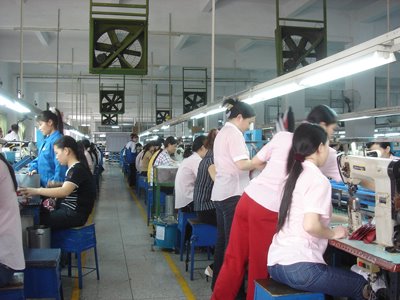
This series covers the full scope of production processes.
While the manufacturing production process might vary depending on the design of the shoe (ie. if it is a football boot or running shoe), and the specifics of each step in the process may be done in a slightly different way from factory to factory, the general process and steps involved is the same.
Click the Read More link below to view the the production process of the hummel 4.2 Concept FGC football boot, produced in China.
Click the Post Titles below for each part in the series.
Introduction
Materials
Cutting
Printing and HF embossing
Stitching
Lasting
Assembly
final QC and packing
Labels: case study, china, design, development, factory, football, hummel, leather, materials, process, production
Leather Tanning

While in China I had the opportunity to check out a leather tannery that produces cow and kangaroo finished products for many top brands' performance and lifestyle footwear.
This particulary tannery doesnt process the raw hides, but rather recieves them in "wet blue" form from local manufacturers or imports skins from Australia/New Zealand (kangaroo leather) or Europe (cow leather).
Click the Read More link below for more pics and info about the leather tanning process.


A "wet blue" is a semi processes skin, that is indeed, both wet and blue. The wet blue skin is a result of a chrome tanning process that is done after raw hide is fleshed and the meat and hair is removed and is designed to keep the skins soft and ready for further processing and free from bacterial growth.


Once the wet blue skins are recieved, they are first soaked in water to soften the skin. Then they go through a process called "semming" (not sure about the spelling of this, anyone have the correct term?), which pushes the water out of the skin, but keeps it soft to work with.
Skins are then "shaved" using a special machine that has a fine sandpaper like roller, which makes the skin (especially the bottom surface) more smooth and even.


After this, the skins are split to the correct thickness by being put through a machine that has knife edge which can accurately split the skin in crosssection.


Skins are then graded and measured. Measurement of processed skins is done using a special table that hasa computer controlled laser system which can determine the square footage of the particular skin and add the quantity to inventory.


After the wet blue process, the skins can then be drum dyed, to set a color or finish. The drum dying process involves putting the skins in giant drums along with various chemicals and dyes. A typical skin may go through 4-5 different 40 mintue cycles of dying with different chemicals for a 6 hour total process. Some special finishes can take up to 12 hours of drum dying.

Skins are then air dried for 2-3 days depending of the temperature and humidity inside the factory and can take up to 1 week in particularily cold or wet weather. the the above and below photos you can see the skins hanging from the ceiling on a conveyor system to dry.


Labels: china, leather, materials, process, production, tanning
Footwear Photoshop Rendering Tutorial > parts 1-6

While every designer has their own method for Photoshop renderings (and I'm by no means an expert), I do get a lot of requests for the process that I typically take to create a presentation rendering. I've put together a little tutorial to show the steps I use.
Click the Read More link below for all 6 parts of this tutorial.
**one note- im doimg this tutotrial from a finished rendering "in reverse" so if you look at the layers or path palettes you will ALL the final layers/palettes that exist at the end of rendering. ive just "un-viewed" the layers to work backwards to show how its done forwards. just so nobody gets confused. (R)

To start with, I make do a sketch of the shoe I am going to render to use as an underlay. The more in proportion and accurate this sketch is, the easier it is to do the required line art which will be used as a template for the rendering.
Using illustrator, I place the scanned sketch in a layer and dim the image (under layer > properties). Then using the pen tool, I draw over the image, making frequent use of the pathfinder (cut, intersect shape areas, add to shape areas) tools.


This line art can then be cut and pasted into photoshop. I cut and paste the same artwork twice. Once as a Path, and once as pixels. The paths are used as cutting paths and masks for the rendering, and the pixels just give a good quick easy overlay/underlay to the rendering so you can see whats going on.

From the path palette, you can select (using the black arrow path modifier tool) different parts of your work path (I usually rename to "All", or something like that). Once you have part of the body shape you want (I start with an outline shape that is whole upper), you can cut and paste that path to create a new path (renamed Body).
This path can then be selected (the little button at the bottom of the Path palette with the dashed line circle), and you can make a new layer to start painting into. As I work, I find it important to keep my layers and paths well organized and named (instead of "Layer 38"), so its easy to find them later. By the end of the rendering I typically end up with something like 30 paths and 60 layers, so having some meaningful name helps a lot.
Once you have a new layer, and a selected area, you can use the paint bucket tool to paint a solid color base for your rendering.
Continued-
Part 2
Part 3
Part 4
Part 5
Part 6
Footwear Terminology
A to Z of footwear technical terms, construction methods, part names, and more.
Buff
To remove material by a sanding or roughing process. For example, EVA midsoles are buffed before assembly to help break the smooth surface for better adhesion to the upper.
Cement/Board Lasting
A lasting process where the insole board (carboard or texon) is inserted onto the last bottom and the lasting margin (excess) material of the upper is lasted onto the board and cemented to the insole board. Shoes of this type are usually more stiff and heavier.
Chemi-Sheet
A nonwoven reinforcement material that is impregnated with a chemical hardener that sets with application of heat or another chemical. Used commonly for counter or toebox reinforcement.
CM EVA
Compression Molded EVA. A foamed midsole material that offers good cushioning and compression set.
Collar
The opening area of a shoe at the top.
Colorway
A color/material combination.
Cosmo
An type of non-woven upper lining and reinforcement material used commonly on cross training and hiking boots that provides a stiffer (compared to Tricot) lining and support for the shoe.
Coutner
The back/heel of the shoe.
Eyelet
A hole through which you lace up a shoe.
Eyestay
The part around the lace opening (throat of the shoe). Can feature webbings, eyelets, etc.
FG
Firm Ground. Refers to football/soccer boots/outsoles designed for use on hard, natural surface.
Insole Board
The bottom part of the lasted upper.
Last
Anatomical representation of the foot for constructing a shoe
Lasting
The process of stretching the preassembled upper around the last, by machine or by hand.
Lasting margin
The upper material part that when lasted folds over the edge of the last onto the bottom, overlapping the insole board.
Midsole
The component of a shoe between the upper and outsole used to provide cushioning, fit, comfort and support.
Outsole
The bottom component of a shoe that provides grip and traction.
Overlay
An upper part which is over another part.
Padding
Refers to foam or other material usually inside the collar or tongue to add thickness/cushioning and improve fit.
PU (upper material)
PU upper materials usually use a thin layer of PU foam with a non-woven or fabric backing for reinforcement and strength.
PU
PolyUrethane. Synthetic (plastic) material with minute bubbles or cells and a skin like surface. Used for upper materials, and in a different form for midsoles or padding foam.
Pullover
A prototype sample for checking pattern and fit.
Quarter
The side of the shoe. Can have many subcomponents and parts.
SG
Soft Ground. Refers to football/soccer boots/outsoles designed for use on soft (wet) natural surfaces.
SKU
Stock Keeping Unit. A unique model/style/colorway/size. Commonly used to refer to a unique colorway. Ie, if there are 2 models each with 5 colorways, there are 10 SKUs total.
Slip Lasting
A lasting process where the insole board (usually canvas) is stitched around the last bottom edge to complete the upper. Usually used for more lightweight, flexible shoes such as running shoes.
SMU
Special Make Up. A special request by a customer (ie. distributor, retailer, etc.). It is normally just a different colorway of an existing shoe, but in some cases can also be a whole new shoe. There is not much more to it, really, just that it is requested directly. In some cases it may be part of a special marketing campaign (ie. one of those "exclusives" for Foot Locker you see), or might just be a product to better serve a particular niche covered by the market demographics, location, etc. (ie. maybe some country/market sells more brown colored shoes, but there are none in the main collection).
Stitch and Turn (seam)
A seam which is stitched to join two parts then flipped inside out so the stitch is hidden.
Toe Cap
Upper part on the toe, usually and overlay.
Tongue
Part which covers the top of the foot. Usually a separate component stitched inside the shoe at the bottom of the throat.
TPU
Thermoplastic PolyUrethane. Synthetic (plastic) material usually used for molded details and components on a shoe such as a molded eyestay, logo, counter reinforcement or waist stabilizer.
Tricot (a brand name, used to refer to a material, also Cambrelle)
Upper lining material, usually used on running shoes that is made from a sandwich of mesh type fabric, that allows a lightweight, breathable construction.
Turf
Refers to football/soccer boots/outsoles designed for very hard/round natural surfaces like dirt or turf and also synthetic grass surfaces.
Underlay
A part of a shoe upper that is under another part.
Upper
The part of a shoe created around the last.
Vamp
Area of the shoe/last on the front/top.
Labels: case study, design, development, factory, innovation, last, leather, materials, outsole, process, production, pullover, sample, tanning, technology, testing, Travel, trend, tutorial, upper


Sketching Exercise

Side project sketching exercise-
Revival Converse style, based on the Pro Team, Pro Star, Pro Leather, Weapon. Overall design focused on ankle support and use of large, high quality leather panels in reference to the original leather styles.
No overcomplicated technical story here, just exploration of pattern and minimal overlays with links to the original forms. Some patterns are flipped (ie. overlay becomes an underlay) and others are exaggerated in size/proportion.
clicl image for larger version.
Labels: basketball, concept, rendering, sketch, sketching

design by category

Some good discussions going on now on the core77 footwear forums at http://boards.core77.com/viewforum.php?f=24
Once discussion is about designing a shoe for a specific category, and how to express a product DNA through proportion, pattern and form to fit.
I've suggested the following tip-
above is an example of this exercise based on a design by ak47celtics from the footwear forum.

Some good discussions going on now on the core77 footwear forums at http://boards.core77.com/viewforum.php?f=24
Once discussion is about designing a shoe for a specific category, and how to express a product DNA through proportion, pattern and form to fit.
I've suggested the following tip-
One trick I find in designing any type of shoes for a particular category is first finding out what "defines" shoes in that category. Already lots of the things have been mentioned (proportion, pattern, materials, colors, collar height, toe cap shapes, etc.). Once you learn the often repeated shapes, forms, etc. then it is that much easier to use these in new ways, redefine common elements and mix new with old.
One "rule" i usually guide new designers with, I call "3 new, 3 familiar". I suggest that if you use 3 common things in a shoe tied to that category (such as proportion, construction, color, a toe cap, materials, etc.), and mix it with 3 "new" things, then the shoe will be balanced between understandable/commercial and different/innovative. Too much familiar and the design is boring and doesnt stand out, and too much new and the design is too challenging and doesnt relate to the consumer or product category.
As a start, I find this is a good way to get a feeling for the "rules" and mix creativity with reality.
Too often, I find younger footwear designers have this balance off, and go either too far out (anit-gravity, magic fastener, space boot looking designs,) or too safe (looks like everything already out there). Finding this balance is important I believe to channel your creativity into useable, fresh, portfolio work.
Here's a challenge -
1. take an existing design from any type of shoe.
2. redraw this shoe to fit in different categories (ie. running, basketball, trail, court, etc.) changing the pattern as little as possible but still making the new design fit to the category.
start this exercise with just linework. Its more difficult if you dont use color.
Doing this, you will quickly find out the things that can make any design "feel" right to the product category. A good way to decode a product category and product DNA.
R
above is an example of this exercise based on a design by ak47celtics from the footwear forum.
Carleton School of Industrial Design

...Just got back from a great weekend up in Ottawa to check out my alma mater, Carleton Universtity School of Industrial Design.
I was honored to be asked to be the keynote speaker at the Alumni Reception on Saturday, and presented my thoughts on design and my experience to the graduating class and ID Alumni.
The Graduation Exhibition, titled 'Open up to Design' features the works of the 4th year students final projects and additional undergrad projects.
From the exhibition info release-
I was overall very impressed with the quality of the projects, presentations and thinking. Just 6 years out of the program myself, I can see there has already been a huge leap forward in understanding of analytical thinking and visual communication compared to my school experience.
In addition, integration with industry and real-life problem solving application was very impressive. The group of fire-fighting equipment designs, for example, worked closely with the Ontario Ministry of Natural Resources Aviation and Forest Fire Management (OMNR AFFM) division. Later this summer some of the selected designs will actually be prototyped and tested in Northern Ontario in real fire fighting scenarios!
To be back in Ottawa and "back at school" really put things in perspective for me. School projects, final models and the anticipation of graduation seems so far away but yet relatively recent in my memory. While difficult, emotional and stressful at the time, I can now see how truely beneficial all the bumps and burns along the way were to my current outlook as a designer and how my past experiences have formed present "design self".
Thanks again to the School of Industrial Design, Carleton University Alumni Association and a special thanks to my professors and mentors.
For more information on the school and the exhibition check out http://www.id.carleton.ca/exhibition
R

...Just got back from a great weekend up in Ottawa to check out my alma mater, Carleton Universtity School of Industrial Design.
I was honored to be asked to be the keynote speaker at the Alumni Reception on Saturday, and presented my thoughts on design and my experience to the graduating class and ID Alumni.
The Graduation Exhibition, titled 'Open up to Design' features the works of the 4th year students final projects and additional undergrad projects.
From the exhibition info release-
This years’ exhibit showcases a range of exciting and innovative products including out of this world lunar habitation devices and equipment, forest-fire fighting equipment and sports equipment that allows Paralympic athletes to compete at a higher level. Other project areas include products that demonstrate concern for social and environmental issues – patient room prototypes, collaborative ‘art gardens’, and ‘winterpret’ – a product range that harnesses the delight of winter. Projects also explore indoor and outdoor urban living environments from space-conscious ‘transfurnishings’ to rooftop garden products. A special highlight of all ten project areas is the important collaboration with industry. Students work closely with professional advisors from Ottawa and Ontario such as the NCC, OMNR (Ontario Ministry of Natural Resources), Ecclesiax, Umbra and the Paralympics Committee, to create hands-on concepts to solve physical problems.
I was overall very impressed with the quality of the projects, presentations and thinking. Just 6 years out of the program myself, I can see there has already been a huge leap forward in understanding of analytical thinking and visual communication compared to my school experience.
In addition, integration with industry and real-life problem solving application was very impressive. The group of fire-fighting equipment designs, for example, worked closely with the Ontario Ministry of Natural Resources Aviation and Forest Fire Management (OMNR AFFM) division. Later this summer some of the selected designs will actually be prototyped and tested in Northern Ontario in real fire fighting scenarios!
To be back in Ottawa and "back at school" really put things in perspective for me. School projects, final models and the anticipation of graduation seems so far away but yet relatively recent in my memory. While difficult, emotional and stressful at the time, I can now see how truely beneficial all the bumps and burns along the way were to my current outlook as a designer and how my past experiences have formed present "design self".
Thanks again to the School of Industrial Design, Carleton University Alumni Association and a special thanks to my professors and mentors.
For more information on the school and the exhibition check out http://www.id.carleton.ca/exhibition
R
Labels: Carleton, design, exhibition, ID, presentation, school
Hong Kong Panorama

Just got back late yesterday from my trip to Hong King and China, and have lots of great pics and posts that will be up soon.
First up, a nice Panoramic shot of HK (Kowloon, Mon Kok area) at night
Click the pic for the full size pic (sorry, can't upload a larger pic to flickr/photobucket)
Just got back late yesterday from my trip to Hong King and China, and have lots of great pics and posts that will be up soon.
First up, a nice Panoramic shot of HK (Kowloon, Mon Kok area) at night
Click the pic for the full size pic (sorry, can't upload a larger pic to flickr/photobucket)
hummel Character, DNA

The concept of character is very important in all hummel products. Character since 1923 is now the company tagline (our "Just Do It"), and this concept evolved and was first developed in footwear.
I first created the "Jeg har Karakter" concept ("I have Character", in Danish) for my first new football collection with hummel, the 2006 Collection. (see post here about the concept and design brief in the 6.2 Concept FG Case Study).
Click the Read More link below for the full story of the development of hummel Footwear Character, product DNA.
As the time, the idea was to frame the collection and provide a matrix concept and reasoning for the all new models to be designed as well as a marketing strategy.
The first step, was looking at the football market and competitors. I felt it was important to attach a concept and theme to hummel football footwear products that hummel could "own". Seeing as how Adidas represented (for the most part) heritage (even though the hummel brand is older), Nike represented Technology, and Puma represented Lifestyle.
As well, given the nature of our small brand compared to the Big 3, and lack of high profile players and teams under sponsorship, combined with our strategy of "non-marketing" and alternative sponsorship (ie. The Tibet National Team) a different competitve strategy was needed.
The "Jeg har Karakter" concept embraced these issues. Character was something unique that hummel could bring (a alternative approach to different aspects of performance, lifestyle, and design) to the market and targeted and celebrated the individual player not the $100 Million dollar athlete.
The idea was solidified with the definition of 3 different Character types that defined the product mix.

The 4 Series Character is traditional, professional, respectful of the heritage of the game.

The 6 Series Character is the "Rock Star", technical, but unique in personality, not afraid to be different, and connected to fashion.

The 8 Series Character is highly refined, technical, focused on performance and efficiency in skill and control.
Most importantly, the Character concept was broad enough yet specific to provide an open umbrella for a multi-target product approach and fit well with the storytelling approach to marketing hummel has championed for a long time.
Text I wrote from the first Football 2006 Catalog-

EVen before this character concept, one of the very first (I think I created it for a presentation about my new footwear direction given 2 weeks after I started in June 2004) and most important things I established at hummel, was the footwear DNA concept.
This DNA concept describes the relationship of different products and different product categories as related with similar characteristics in design and concept.
This DNA was developed to bring all footwear products closer and define a strong brand identity.
Visually, you can see these in various details and patterns that are used across product categories including the rear mudgaurd pattern, rounded punched eyelets with embroidery (which has a shape similar to the shape of the "L" in hummel, rear heel window patterns.


This DNA concept has been in uses on all collections since the establishment of the new footwear dept. at hummel and is evident in the design of the new 8.4 PIO FGX.

This DNA concept has also been applied bringing the PIO (Per Invitation Only Concept) to sport. The 8.4 PIO FGX was the first technical teamsports product in hummel to be under the PIO label, and has now set the direction for the PIO label to be applied to all products across categories in both footwear and apparel.

Taking the root idea of PIO, exclusivity, luxury, uniqueness, lifestyle and storytelling, the 8.4 PIO FGX brings these elements to our top technical boot (remember 8 Series products are focused for the technical player). In this way, the 8.4 PIO FGX adopts some characteristics of the 6 series (Rock Star player), and links with the DNA established in other footwear categories.
Likewise the 4.2 PIO FGC in camo Pittards WR100X Analine leather adopts some feel of the 6 Series (Rock Star) and 8 Series (Technical) with a unique, high performance military spec material treatment.


The concept of character is very important in all hummel products. Character since 1923 is now the company tagline (our "Just Do It"), and this concept evolved and was first developed in footwear.
I first created the "Jeg har Karakter" concept ("I have Character", in Danish) for my first new football collection with hummel, the 2006 Collection. (see post here about the concept and design brief in the 6.2 Concept FG Case Study).
Click the Read More link below for the full story of the development of hummel Footwear Character, product DNA.
As the time, the idea was to frame the collection and provide a matrix concept and reasoning for the all new models to be designed as well as a marketing strategy.
The first step, was looking at the football market and competitors. I felt it was important to attach a concept and theme to hummel football footwear products that hummel could "own". Seeing as how Adidas represented (for the most part) heritage (even though the hummel brand is older), Nike represented Technology, and Puma represented Lifestyle.
As well, given the nature of our small brand compared to the Big 3, and lack of high profile players and teams under sponsorship, combined with our strategy of "non-marketing" and alternative sponsorship (ie. The Tibet National Team) a different competitve strategy was needed.
The "Jeg har Karakter" concept embraced these issues. Character was something unique that hummel could bring (a alternative approach to different aspects of performance, lifestyle, and design) to the market and targeted and celebrated the individual player not the $100 Million dollar athlete.
The idea was solidified with the definition of 3 different Character types that defined the product mix.

The 4 Series Character is traditional, professional, respectful of the heritage of the game.

The 6 Series Character is the "Rock Star", technical, but unique in personality, not afraid to be different, and connected to fashion.

The 8 Series Character is highly refined, technical, focused on performance and efficiency in skill and control.
Most importantly, the Character concept was broad enough yet specific to provide an open umbrella for a multi-target product approach and fit well with the storytelling approach to marketing hummel has championed for a long time.
Text I wrote from the first Football 2006 Catalog-
Imagine life without stories. Events only existing in the present. No recollection of our history, or dreams for the future. From generation to generation we have passed down stories since man has existed in tribes. These tribes/groups are defined by the stories they tell.
Imagine stories without characters. Tales only of inanimate places, things, stuff. It is in fact the characters of our stories, and by our own character in life that we define ourselves within the groups and teams we live and play. We are all characters. We are all individuals. Characters are integral to creating excitement.
In developing the hummel Football 2006 Collection, we have considered the individual characteristics of the characters present in any team. Exploring each product as a character we have combined technology, design and style to engineer a cast of unique personalities.
We are all Characters. We all have Character.
Jeg har Karakter.

EVen before this character concept, one of the very first (I think I created it for a presentation about my new footwear direction given 2 weeks after I started in June 2004) and most important things I established at hummel, was the footwear DNA concept.
This DNA concept describes the relationship of different products and different product categories as related with similar characteristics in design and concept.
This DNA was developed to bring all footwear products closer and define a strong brand identity.
Visually, you can see these in various details and patterns that are used across product categories including the rear mudgaurd pattern, rounded punched eyelets with embroidery (which has a shape similar to the shape of the "L" in hummel, rear heel window patterns.


This DNA concept has been in uses on all collections since the establishment of the new footwear dept. at hummel and is evident in the design of the new 8.4 PIO FGX.

This DNA concept has also been applied bringing the PIO (Per Invitation Only Concept) to sport. The 8.4 PIO FGX was the first technical teamsports product in hummel to be under the PIO label, and has now set the direction for the PIO label to be applied to all products across categories in both footwear and apparel.

Taking the root idea of PIO, exclusivity, luxury, uniqueness, lifestyle and storytelling, the 8.4 PIO FGX brings these elements to our top technical boot (remember 8 Series products are focused for the technical player). In this way, the 8.4 PIO FGX adopts some characteristics of the 6 series (Rock Star player), and links with the DNA established in other footwear categories.
Likewise the 4.2 PIO FGC in camo Pittards WR100X Analine leather adopts some feel of the 6 Series (Rock Star) and 8 Series (Technical) with a unique, high performance military spec material treatment.

Labels: branding, concept, design, DNA, football, hummel, identity, indoor, lifestyle, marketing, process
hummel Technologies design

As mentioned in the 8.4 PIO FGX Unboxing post, I have been involved in more than just "footwear design" here at hummel. A large part of my work is the strategic design and creative direction of the hummel Footwear brand.
One of the very first things I did after starting at hummel 2.5 years ago was to build up a portfolio and create a brand package for technology and performance features that are used in our footwear.
Click the Read More link below for more information.
The purpose of this technology portfolio was to further communicate the unique performance aspects of our shoes and create a better understanding of performance and value in the mind of our customers.

The above Technology Matrix I designed to visually communicate the idea that different parts of the shoe (ie. upper, outsole, etc.) use and feature different type of technologies (ie. cushioning, breathability, etc.) Each technology is therefore tuned and focused depending on the location and application of the part/implementation.
Together with this matrix, I created a series of names and logos to be identified with each product benefit. We went through lots of different ideas for names, some really terrible (ie. matress for cushioning) and others just strange (ie. TSS, Thorax Support System, based on words from a bee's body, for support).

As well, the graphic icons went through several rounds of design iterations. Here's some early explorations.


The final logos and technology micro-brands are now used across all our technical footwear product, and some technical apparel as well. Every performance shoe includes a hangtag with the tech logos and matrix and tech logos are also incorporated into the product design of the footwear.


A small point that some may not notice, but something that help make the product and the details stand out for a consumer.
< Newer Posts
Older Posts >

As mentioned in the 8.4 PIO FGX Unboxing post, I have been involved in more than just "footwear design" here at hummel. A large part of my work is the strategic design and creative direction of the hummel Footwear brand.
One of the very first things I did after starting at hummel 2.5 years ago was to build up a portfolio and create a brand package for technology and performance features that are used in our footwear.
Click the Read More link below for more information.
The purpose of this technology portfolio was to further communicate the unique performance aspects of our shoes and create a better understanding of performance and value in the mind of our customers.

The above Technology Matrix I designed to visually communicate the idea that different parts of the shoe (ie. upper, outsole, etc.) use and feature different type of technologies (ie. cushioning, breathability, etc.) Each technology is therefore tuned and focused depending on the location and application of the part/implementation.
Together with this matrix, I created a series of names and logos to be identified with each product benefit. We went through lots of different ideas for names, some really terrible (ie. matress for cushioning) and others just strange (ie. TSS, Thorax Support System, based on words from a bee's body, for support).

As well, the graphic icons went through several rounds of design iterations. Here's some early explorations.


The final logos and technology micro-brands are now used across all our technical footwear product, and some technical apparel as well. Every performance shoe includes a hangtag with the tech logos and matrix and tech logos are also incorporated into the product design of the footwear.


A small point that some may not notice, but something that help make the product and the details stand out for a consumer.
Labels: branding, concept, design, development, football, graphics, hummel, identity, indoor, innovation, marketing, technology

- Aluminum Last Making VIDEO
- How to Make a Last
- How a Football Boot is Made
- Leather Tanning
- Footwear Photoshop Rendering Tutorial > parts 1-6
- how to prepare rubber in 1m03s
- Footwear Terminology
- Sketching Exercise
- 3D sketch exercise
view my portfolio:
coroflot.com/rkuchinsky


- Labels
- art
- award
- branding
- case study
- catalog
- china
- concept
- cophenhagen
- denmark
- design
- development
- DNA
- exercise
- factory
- fashion
- football
- germany
- graphics
- hongkong
- hummel
- identity
- illustration
- indoor
- inspiration
- interview
- ISPO
- last
- leather
- lifestyle
- materials
- munich
- outsole
- packaging
- photo
- photoshop
- PR
- presentation
- process
- production
- pullover
- rendering
- sample
- school
- sketch
- technology
- testing
- trend
- tutorial
- video
